
Roof Inspection Duncanville TX You Can Trust
A real inspection covers the roof, the attic and the drainage
An inspection is the gateway to every other roofing decision: repair, replacement, or nothing yet. Cabrera & Sons Roofing inspects the shingles, the flashing, the vents, the gutters, the decking and the attic, and shows you photos of what we find. Call (469) 898-7253.
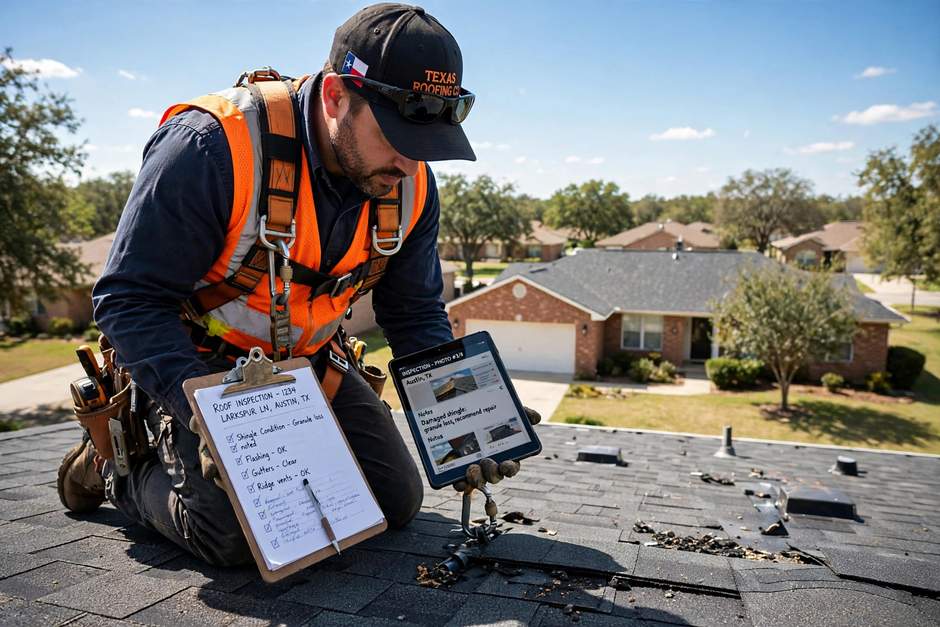
What a Roof Inspection Duncanville TX Really Covers
A real inspection covers the roof surface, the attic and the drainage, item by item. On the surface: granule loss, bruising, lifted shingles, flashing, pipe boots and valleys. In the attic: ventilation, the underside of the decking, and daylight where there should be none. At the edges: gutters and downspouts, and whether water is getting away from the house.
The deliverable is photos and a written report of what was found, so you can decide what to do next with evidence rather than a sales pitch. An inspection is not a guarantee of insurability, and it is not a promise that a claim will be approved. It is a record of the roof as it stands on the day it was inspected.
Why Duncanville Homeowners Get Inspected Early
A roof problem found early is a repair. The same problem found late is decking, insulation and ceilings.
Finds Problems While They Are Small
Hail bruises are invisible from the ground, and they turn into leaks a season later. An inspection with photos finds them now.
Finds Hail Bruising Early
A flashing or a pipe boot that has started to fail is cheap to fix and expensive to ignore. An inspection catches it while it is still small.
Catches Failing Flashing
Dated photos taken soon after a storm are what a claim file needs. An inspection right after the storm is what produces them.
Documents Damage in Time
An inspection before buying a house tells you what you are buying. A roof at the end of its life is a cost the buyer should know about before closing.
How Our Inspection Process Works
An inspection follows the same order every time, so nothing is skipped and you get the same record whichever roofer does it.
Your Reason for the Inspection
You tell us why you want the inspection: a storm, a leak, a house purchase, or a routine check. That tells us what to look for.
Roof Surface Check
We walk the roof surface and check the shingles, flashing, pipe boots, valleys, vents and gutters.
Attic Check
We check the attic for ventilation, the underside of the decking, daylight, and wet insulation.
Photos of Everything
We photograph everything we find, good and bad, so the record shows the roof as it stands.
Written Report
We give you a written report with the photos, and tell you what needs doing now, what can wait, and what does not need doing at all.
Roofing Expertise You Can Verify
Cabrera & Sons Roofing is based at 170 E Hwy 67 in Duncanville, and the inspection work is Duncanville work: storm inspections after the spring hail season, pre-sale inspections on the city's 1960s and 1970s ranch stock, and routine checks that catch flashing and pipe-boot wear early. We photograph what we find and report it in writing.
- Rated 4.9 out of 5 from 51 Google reviews, with five reviews shown in full on our home page
- Roof surface, attic and drainage checked, item by item, with photos
- Storm, pre-sale and maintenance inspections, each reported the same way
- Written report with photos, so you can decide with evidence
- Straight answers about what needs doing now, what can wait, and what does not need doing
Why Our Roof Inspection Duncanville Stands Apart
Homeowners ask us for an inspection when they want a straight answer about their roof, and they judge us on whether the report matches what they can see for themselves.
Surface, Attic and Drainage
We inspect the roof surface, the attic and the drainage, and photograph everything we find, good and bad.
Written Report With Photos
The report is written, with photos, so you can show it to a buyer, a seller or an insurer.
Straight Answers
We tell you what needs doing now, what can wait, and what does not need doing at all. An inspection that finds nothing wrong is a good result.
The Report Is Yours
The yard is left as we found it, and the report is yours to keep whether or not you hire us for the work.
What Our Roof Assessment Includes
A roof assessment is a defined scope. These are the parts of it, and each one is in the written report.
What's Included
Shingle Field Check
Granule loss, bruising, lifted shingles and cracked shingles across the whole field, photographed slope by slope.
Flashing and Pipe Boot Check
Flashing at walls, valleys and chimneys, and pipe boots at every vent, checked for gaps, cracks and failed sealant.
Ventilation Check
Ridge vents and soffit intake checked against the adopted code, so the attic vents the way it should.
Attic and Decking Check
The underside of the decking checked for daylight, stains and soft spots, and the insulation checked for wet patches.
Gutter and Drainage Check
Gutters and downspouts checked for granules, dents and blockages, and whether water is getting away from the house.
Roof Problems We Find Before They Spread
These are the problems an inspection finds most often on Duncanville roofs. Each one is photographed and written into the report.
Granule loss and hail bruising
Granule loss and bruising show the field wearing out or hail damage that has not leaked yet. We photograph it slope by slope.
Granule loss in the gutters is the roof wearing out in plain sight. An inspection finds it before it becomes a leak.
Flashing gaps and cracked pipe boots
Flashing gaps and cracked pipe boots are the most common leak sources, and they are cheap to fix while they are small.
A flashing gap or a cracked boot leaks a little at first and more with every storm. An inspection catches it while the repair is still small.
Blocked valleys and gutters
Blocked valleys and gutters send water sideways under the field. We clear what we can see and report what needs doing.
A blocked valley is a drainage problem, not a shingle problem, and it is fixed by clearing it and sealing it.
Soft decking and daylight in the attic
Soft decking and daylight in the attic show water has already crossed the roof. We report it with photos, so the repair is quoted on evidence.
Daylight in the attic means the roof is open somewhere. An inspection finds the opening before the next storm finds it.
When to Schedule a Roof Assessment
After a storm or heavy rain
After any hail or wind storm, and after heavy rain that left a stain or a drip.
A storm inspection is done soon after the storm, while the damage is fresh and the claim can still be filed.
Before buying a house
Before buying a house in Duncanville, so you know what the roof will cost you after closing.
A pre-sale inspection tells the buyer what they are buying. A roof at the end of its life is a cost to know about before closing.
Once a year as a routine check
Once a year, in spring or fall, as a routine check on a roof that is aging.
A routine inspection catches flashing and pipe-boot wear while the repair is still small.
When granules appear in the gutters
When granules appear in the gutters, or shingles start curling at the edges.
Granule loss and curling are the field wearing out. An inspection shows whether a repair still makes sense.
Tools and Methods We Use on Every Roof
Tools & Equipment
Camera for the record
A camera, to photograph everything we find, good and bad, so the record shows the roof as it stands.
Moisture meter
A moisture meter, to find wet decking and ceiling cavities before we close the roof up over them.
Ladder and safety harness
A ladder and safety harness, so the crew is tied off on steep pitches and two-story homes.
Tape measure
A tape measure, to measure the roof and the damaged areas for the written report.
Flashlight for the attic
A flashlight, to check the attic for daylight, stains and soft spots in the decking.
Methods & Techniques
Surface, attic, drainage
Inspect the roof surface, the attic and the drainage, in that order, so nothing is skipped.
Photograph everything
Photograph everything, good and bad, so the report is a record of the roof as it stands.
Written report with photos
Report in writing, with photos, so you can show it to a buyer, a seller or an insurer.
Straight answers
Say what needs doing now, what can wait, and what does not need doing at all.
How Roof Inspection Works in Duncanville
A real inspection is an item-by-item record, not a walk around the house and a verdict. It starts in the attic, where ventilation, the underside of the decking and any daylight through the boards tell the story the surface cannot. Then it works across the surface — granule loss, bruising, lifted shingles, flashing, boots and valleys — and finishes at the drainage, with photos of everything found.
Service Areas
Greenbriar Estates: Established lots in south Duncanville, built mostly in the early 1980s, where an inspection covers the attic, the valleys and the roof surface, with photos.
River Oaks: Homes in south Duncanville, around Linkwood Drive, where an older roof's decking underside is read from the attic before any surface call is made.
Fairmeadows: Mid-century ranches in north-central Duncanville, where low-slope porch sections and their flashing get their own line in the inspection report.
Camp Wisdom Road corridor: Homes along Camp Wisdom Road, where an inspection covers the ridge, the slopes and the flashing, with photos.
Local Considerations
The attic first
The attic first: Ventilation, the decking underside and any daylight through the boards are checked before the surface, because the attic shows what the shingles hide.
Surface, item by item
Surface, item by item: Granule loss, bruising, lifted shingles, flashing, boots and valleys are each recorded separately, so the report can be compared with the next inspection.
Drainage last, photos throughout
Drainage last, photos throughout: Gutters and downspouts close the inspection, and every finding is photographed, because the photos are the deliverable you keep.
What a Hail-Bruised Shingle Roof Shows an Inspector
A hail-bruised shingle roof shows dark, soft spots on the mat where the impact crushed the granules, with granules washing into the gutters and dents on vents and gutters. The roof can look fine from the ground while the mat is damaged across a whole slope.
The inspection is a slope-by-slope walk with dated photos of the bruising, the granule loss and the dented metal, plus an attic check for daylight and wet insulation. The report is written on what the inspection actually found.
Maintenance & Follow-up
Have the roof inspected after any hail event, and keep the dated photos with your insurance paperwork. A quick inspection catches bruises before they turn into leaks.
A flashing leak shows as a stain on the ceiling near a chimney or a valley, where the flashing has pulled loose or the sealant has failed.
The inspection traces the stain in the attic, then checks the flashing on the roof, so the report shows the source and not just the stain.
Maintenance & Follow-up
Watch the ceilings near chimneys and valleys after rain. A stain that grows is a leak that is still running.
Soft decking shows as a spongy feel underfoot on the roof, or as stains and soft spots on the underside in the attic.
The inspection checks the decking from underneath in the attic, and from above once the roof is open, so the report shows what needs replacing.
Maintenance & Follow-up
Have the attic checked when a leak has run for a season. Soft decking is what turns a repair into a replacement.
Frequently Asked Questions
Have questions? We have answers. If you do not see your question here, call us at (469) 898-7253.
Call UsHow often should I have my roof inspected in Duncanville?
Twice a year is the usual recommendation, in spring and fall, plus after any storm with hail or wind. An inspection after a storm is the one that matters most, because it produces the dated photos a claim file needs. How often to get a roof inspection
What does a roof inspection include?
The roof surface, the attic and the drainage: shingles, flashing, pipe boots, valleys, vents, gutters, the underside of the decking, and ventilation. The deliverable is photos and a written report of what was found.
How much does a roof inspection cost in Texas?
No figure here is this business's price, and the published figures conflict, so no inspection range is stated here. We quote the inspection in writing before we come out.
Is a roof inspection free?
We do not advertise a roof inspection, because no free-inspection offer has been confirmed for this business. Call (469) 898-7253 and we will quote the inspection in writing before we come out.
What to Check Before You Hire Us
An inspection is only useful if you can see what was checked.
What you can check
Ask what the inspection covers — attic, surface, flashing, boots, valleys, gutters and downspouts — and what you receive in writing afterwards. Photos of each finding matter more than a verbal summary.
What customers say
Ask whether the report notes granule loss, bruising, flashing and drainage separately, so you can compare it with the next inspection. Call (469) 898-7253 to book an inspection.
Related Services
What Duncanville Homeowners Say
One of the five reviews on our Google profile, exactly as the customer wrote it. The other reviews are counted in the 4.9 out of 5 aggregate from 51 reviews.
“We had a pretty bad roof leak over our garage after a heavy rain, and the ceiling inside started looking stained. We were worried it was going to get worse if it rained again. We called Cabrera and Sons Roofing and they came out and inspected everything and explained what was going on in a way that was easy to understand. They found the problem and fixed the leak, and even checked the rest of the roof to make sure nothing else was going to cause trouble later. The work was clean and they left everything tidy when they finished. We really appreciated how responsive and honest they were the whole way through, and we would definitely recommend them to anyone who needs roof help. The roof has been completely dry since the repair, and we finally have peace of mind after all that rain.”
Irene Sandoval
Google review
Book Your Roof Inspection Duncanville TX Today
Call Cabrera & Sons Roofing at (469) 898-7253. Tell us why you want the inspection, and we will inspect the roof, the attic and the drainage, and give you a written report with photos.