
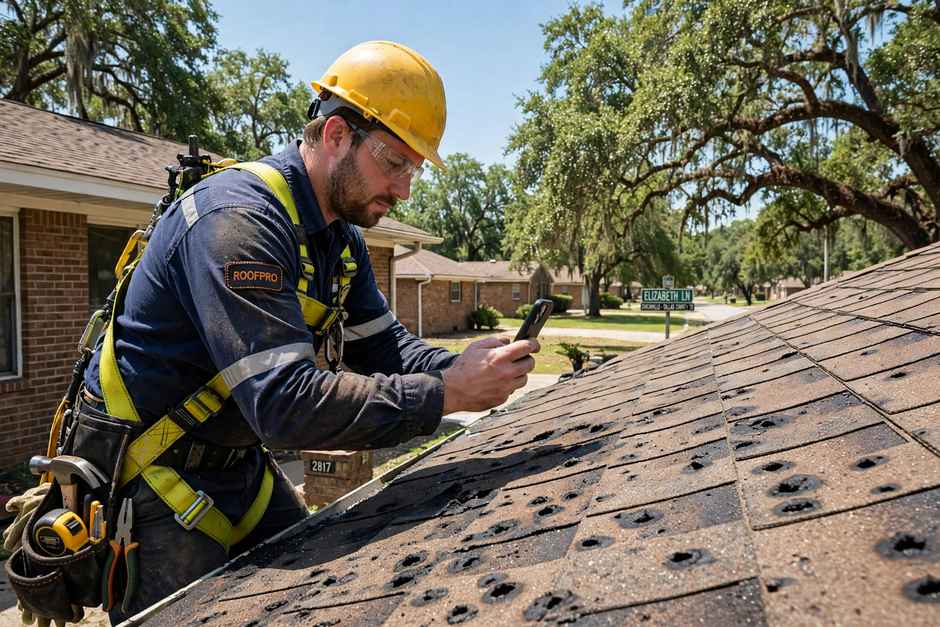
Duncanville hail is not hypothetical
Duncanville sits in one of the most hail-active parts of North Texas. Within 10 miles of the city there have been 51 hail days since 2006, and 41 of those days produced hail of at least one inch. The largest hail in that record fell on 12 June 2023, when 4-inch hail — grapefruit size — was reported in Cedar Hill, about 6 miles away, with 2-inch hail reported in Duncanville itself the same day.
The closest large event came on 26 April 2026, when 3-inch hail fell around Cockrell Hill and Lakeview, as close as about a mile from Duncanville, with 1-inch hail reported in Duncanville itself. Hail season here runs March through June, peaking in April and May, with a smaller second round in September and October. After any of these storms, the right move is a careful look — from the ground first, then a professional hail damage roof inspection — before the next rain tests the roof.
Signs to check from the ground
Start where it is safe: the yard, the gutters and the view from the ground. Never climb a wet or hail-slick roof to look for damage yourself.
- Granules in gutters and downspouts. Hail knocks the protective granules off shingles in round patches. A gutter full of granules after a storm is one of the clearest signs the roof took hits.
- Dented metal. Check vents, flashing, gutters, downspouts and the air-conditioning condenser. Dented metal is a tell-tale that the shingles took hits too.
- Shingle pieces on the ground. Hail and the wind that comes with it can crack and dislodge shingles, especially older, brittle ones.
- Cracked or dented skylights and damaged window screens. Collateral damage around the house helps confirm the storm’s severity at your address — hail can hit one street and miss the next.
What a roofer looks for on the roof
On the roof, hail damage shows up as bruises: soft, spongy spots where the mat underneath the granules has been crushed. Bruised shingles often look fine at a glance, which is why hail damage is so often missed. Other signs are granule loss exposing the black mat, cracked or split shingles, and circular impact marks. Older shingles are more vulnerable because heat-aged asphalt turns brittle and fractures instead of flexing. Repeated smaller hail events can bruise and micro-fracture shingles, and those fractures widen into leaks over time.
Our guide to telling if your roof has hail damage goes deeper into the difference between hail bruising and ordinary wear, and our storm damage roof repair page explains what a storm inspection should produce.
Document before you repair
If you suspect hail damage, document it before anything is repaired or replaced. Photograph the roof, the dented metal, the granules in the gutters and the date of the storm. Keep the photos with the storm date — your insurer will want a date of loss, and the 26 April 2026 and 12 June 2023 events are the dated anchors Duncanville homeowners most often need.
Then get a written inspection with photos and measurements. A roofer may inspect and document damage, provide a written estimate and meet the adjuster on site, but may not act as your public adjuster. Texas law requires you to pay your deductible. If you need help now, call (469) 898-7253 to arrange an inspection and a written report.
When to call a roofer
Call for an inspection after any hail of an inch or more, after a storm that dented metal or broke skylights nearby, or if you find granules in the gutters or a new ceiling stain. Even if nothing leaks yet, bruised shingles lose their UV protection and age faster, and a documented inspection protects you if the damage shows up months later. A roof inspection in Duncanville after a storm is the cheapest way to know where you stand.