
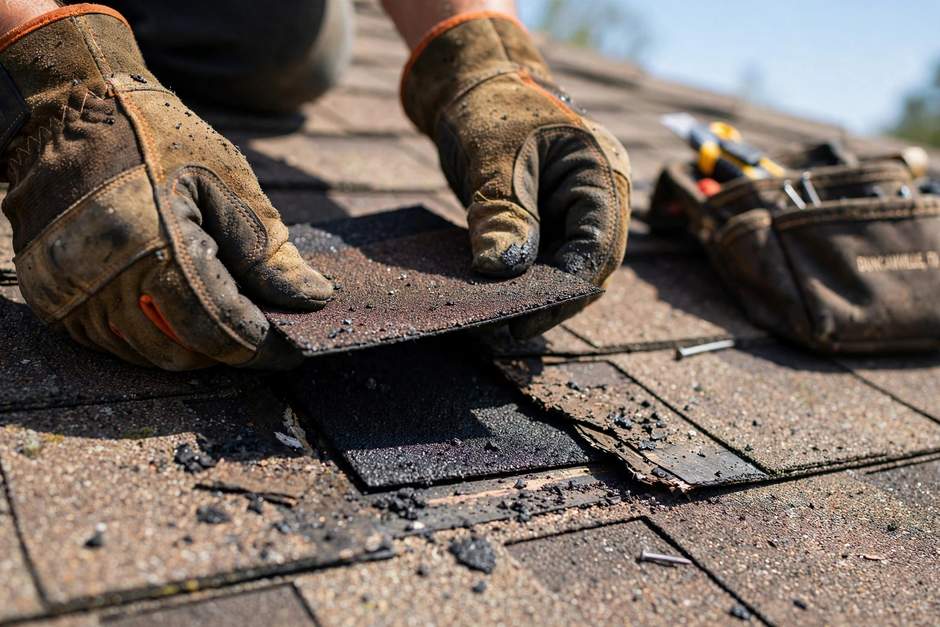
The rule: work from inside, never on a wet roof
Everything in this guide happens from inside the house or from the ground. Do not climb onto a wet, steep or hail-slick roof to patch a leak. Roof work in the rain is how people get hurt, and a slip on wet shingles can be worse than the leak. If water is coming in and you cannot safely reach the problem from inside, the right temporary measure is a bucket, not a ladder. Call for help instead — see our emergency roof repair page.
Temporary measures that help
- Catch the water. Buckets under the drip, towels around them, and furniture moved out of the way. If the ceiling is bulging, a small puncture at the lowest point of the bulge, made into a bucket, releases the water in a controlled way.
- Find the path in the attic — only if it is safe. In daylight, from the attic floor, look for the wettest insulation and the damp decking above it, and photograph what you see. Never step on ceiling joists or wet decking, and never enter an attic with standing water or sagging structure.
- Contain it with plastic. A sheet of plastic under the leak in the attic, draped into a bucket, can keep water off insulation and ceilings until the roofer arrives. It does not fix the roof; it buys time.
- Move water away from wiring. If water is near light fixtures or wiring, switch off the affected circuit at the breaker panel.
What you should not do: do not smear caulk or roofing cement on a wet roof surface, do not nail a tarp to wet shingles from a ladder, and do not seal a leak from inside the attic with spray foam. Interior sealants trap water in the assembly and make the eventual repair harder.
How Long a Temporary Roof-Leak Patch Lasts
A bucket-and-plastic setup lasts until the roofer arrives — hours to a day or two, not a season. Temporary patches fail because they do not address the entry point: flashing, a pipe boot, a valley or a lifted shingle. The permanent repair removes the damaged material, inspects the decking, replaces what is rotten and reinstalls the flashing or shingles properly. See our roof repair page for how that diagnosis works, and why water drips from the ceiling after a storm for the triage steps. If the leak is active now, call (469) 898-7253 to arrange help.