
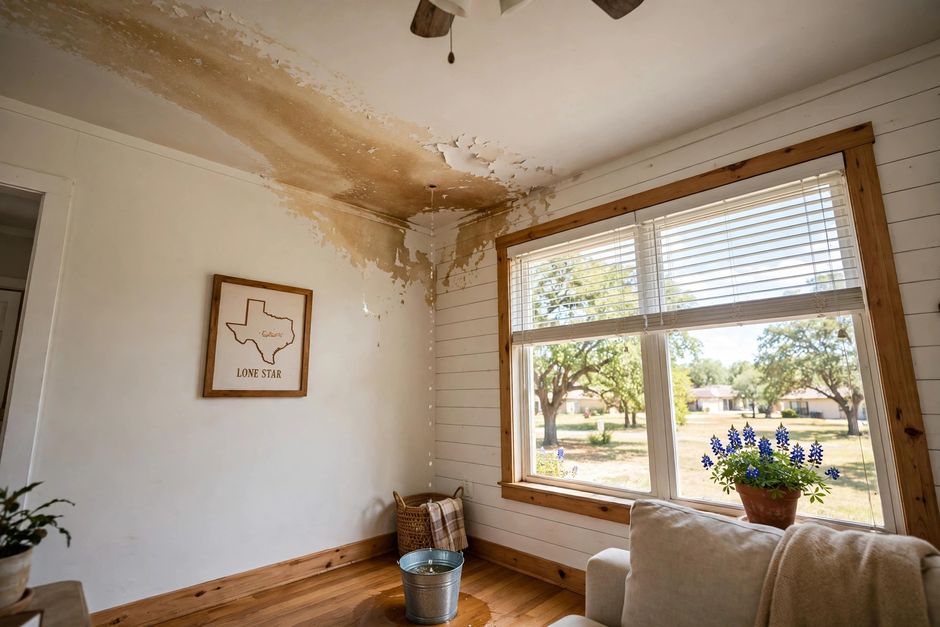
What the drip means
A ceiling drip after a storm means water got past the roof covering and found its way through the decking and insulation to the ceiling. The entry point is usually not above the stain: water travels along the deck and insulation before it drips, so the breach can be several feet away, often at flashing, a pipe boot, a valley or a lifted shingle. Duncanville’s storms deliver the water fast — May averages 4.78 inches at DFW Airport, and the rain arrives in short violent bursts that test every valley, penetration and flashing at once. Hail and wind from the same storm often open the path the rain then uses.
What to do first: safety, then mitigation
Stay safe. Do not climb a wet roof, and do not go into an attic with standing water or sagging decking. If water is near light fixtures or wiring, turn off the affected circuit at the breaker panel. If the ceiling is bulging or sagging, keep clear — a waterlogged ceiling can come down.
Mitigate the water. Put a bucket under the drip and move furniture and valuables out of the way. If the ceiling is bulging, a small puncture at the lowest point of the bulge, made with a screwdriver into a bucket, can release the water in a controlled way rather than letting the ceiling fail. Poke only the bulge, not the surrounding drywall.
Document it. Photograph the drip, the stain and the date, and note the storm. If you go into the attic — only if it is dry and safe underfoot — photograph any damp insulation and the decking underside. This record matters for any insurance claim.
Stop the entry, not just the drip. A tarp over the damaged area stops further water while the repair is arranged. Do not attempt this yourself on a wet roof. See our emergency roof repair page for what to do tonight, and how to patch a small roof leak before a roofer arrives for the safe temporary measures.
What the roofer does next
A roofer traces the stain back to its entry point — flashing, pipe boots and valleys are the usual hierarchy — inspects the decking for rot, and repairs the breach. The repair should be water-tested and photographed. If the damage came from hail or wind, the inspection should produce dated photos and a written scope before any repair, because the claim file needs them. A roofer may document damage and provide a written estimate, but may not act on your behalf with your insurer, and you must pay your own deductible under Texas law. See our roof repair and storm damage roof repair pages for the process. If water is coming in now, call (469) 898-7253 to arrange help.